Garmin inReach Explorer+ Handheld Communicator: An In-Depth Review
Whether you’re a backcountry hiker, mountaineer, sailor, or someone who simply loves getting off the grid, the Garmin inReach Explorer+ Handheld Communicator is a device that may well earn a place in your essential gear list. Combining GPS navigation, two-way satellite messaging, and emergency SOS features, the Explorer+ is specifically built for adventurers who need reliable communication when cell service is absent.
In this review, I’ll break down the features, performance, usability, pros, cons, and common questions surrounding the Garmin inReach Explorer+. Let’s see whether it’s the right device for your next adventure.
Overview of the Garmin inReach Explorer+
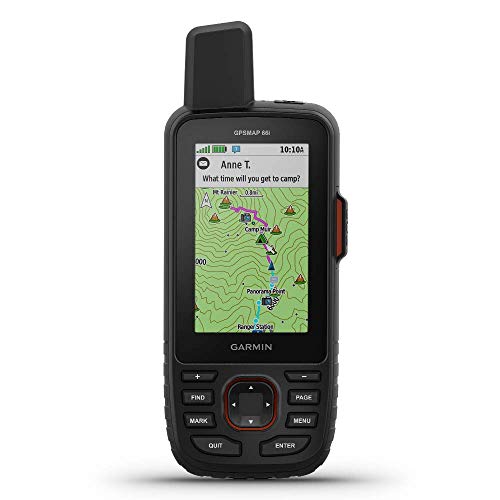
The Garmin inReach Explorer+ is a rugged handheld GPS device with two-way satellite communication via the Iridium satellite network. It’s designed for global use, meaning you can send and receive messages virtually anywhere on Earth. One of its most valuable features is the built-in SOS capability that connects directly to GEOS, a professional 24/7 global monitoring and emergency response center.
In addition to its satellite communication, the Explorer+ includes full GPS navigation, preloaded topographic maps, a digital compass, a barometric altimeter, and an accelerometer, which collectively support accurate tracking and route planning.
Key Features:
-
Two-way text messaging via satellite (subscription required)
-
Interactive SOS with 24/7 monitoring center
-
GPS with preloaded DeLorme topographic maps
-
Tracking and location sharing
-
Digital compass, barometric altimeter, and accelerometer
-
Up to 100 hours of battery life in tracking mode
-
Weather forecast capability
-
Waterproof and impact-resistant
Performance and Real-World Use
Satellite Communication
One of the most outstanding features of the Garmin inReach Explorer+ is its ability to send and receive text messages from virtually anywhere. This is made possible through the Iridium satellite network, which provides pole-to-pole coverage. Unlike traditional GPS devices that can only track your location, the Explorer+ allows two-way communication, enabling users to both send out distress messages and receive replies.
In real-world testing, the messaging function is reliable but not instantaneous. Depending on your position and the satellite alignment, sending or receiving a message can take anywhere from a few seconds to several minutes. Still, in the context of wilderness travel, this delay is generally acceptable.
SOS Functionality
The dedicated SOS button is a life-saving feature. When activated, it contacts GEOS, which coordinates with local emergency services based on your location. The two-way messaging capability during an SOS event is a key advantage because it allows you to communicate the nature of your emergency and receive instructions or status updates in return. This communication can be invaluable in situations where time is of the essence.
Navigation and Tracking
Navigation on the Garmin inReach Explorer+ is solid. The preloaded DeLorme topographic maps are sufficient for most hiking, trekking, and paddling adventures. The GPS tracking is accurate, and the breadcrumb trail is easy to follow. The digital compass and barometric altimeter add a layer of confidence when traversing rugged terrain or when the weather changes rapidly.
You can also share your tracking in real time with friends and family via the Garmin MapShare website (subscription required), giving peace of mind to those at home.
Battery Life
Garmin advertises up to 100 hours of battery life in tracking mode with 10-minute intervals. In practice, battery performance closely aligns with these estimates. Battery life can extend further if the tracking intervals are set to longer periods or if the device is used conservatively.
For extended trips, it’s wise to carry a portable power bank, but the inReach Explorer+ does a good job of balancing functionality and energy efficiency.
Build Quality and Interface
The device is rugged, water-resistant (IPX7 rating), and can withstand drops and rough handling. The physical buttons are intuitive and usable even with gloves, which is crucial in cold environments.
The interface is somewhat dated compared to modern smartphones, and the screen lacks touch sensitivity. Navigation through menus is done via physical buttons, which, while practical in harsh conditions, may feel slow and clunky to users accustomed to touchscreen devices.
Advantages of the Garmin inReach Explorer+
-
Global Satellite Coverage
The device works worldwide through the Iridium satellite network, offering peace of mind when traveling in remote locations. -
Two-Way Messaging
Unlike some competitors that only offer one-way SOS alerts, the Explorer+ supports two-way messaging for both casual check-ins and emergency communication. -
Reliable SOS Service
The GEOS monitoring center provides immediate access to emergency assistance with real-time communication. -
Preloaded Maps and Navigation Tools
Topographic maps, GPS routing, a digital compass, and an altimeter make it a versatile navigation device, eliminating the need to carry a separate GPS. -
Durability
The inReach Explorer+ is designed to withstand harsh environments, featuring a water-resistant and impact-resistant construction. -
Decent Battery Life
Up to 100 hours in tracking mode is impressive for a satellite communicator. -
Weather Forecasts
You can request weather updates for your location or a planned destination, which is especially useful in rapidly changing conditions. -
Real-Time Tracking
Friends and family can track your journey live, offering safety benefits and connection to loved ones.
Disadvantages of the Garmin inReach Explorer+
-
Subscription Cost
To use messaging, SOS, and tracking features, a satellite subscription plan is required. These can be pricey, especially for frequent users. -
Bulky Compared to Smartphones
While it’s compact for what it does, it is bulkier than a smartphone or smaller GPS units, which may be a factor for ultralight hikers. -
Non-Touchscreen Interface
The button-driven interface feels outdated and can be slow to navigate, especially when typing out messages. -
Screen Resolution and Graphics
The display is functional but not crisp. It’s monochrome and lags behind modern mapping apps in visual clarity. -
Learning Curve
Although not overly complicated, some users report a moderate learning curve when setting up the device and navigating its menus for the first time. -
Limited Mapping Details
The preloaded maps are sufficient for basic navigation but lack the rich detail of more advanced mapping solutions, such as Gaia GPS or Google Maps.
Common Questions About the Garmin inReach Explorer+
1. Do I need a subscription to use the Garmin inReach Explorer+?
Yes, a subscription is necessary to access the satellite communication features, including messaging, SOS, and tracking. Garmin offers various plans, including annual contracts and flexible month-to-month options. The cost depends on the number of messages you plan to send and whether you require real-time tracking.
2. Can I use the inReach Explorer+ as a standalone GPS without a subscription?
Yes, you can still use the GPS navigation, digital compass, altimeter, and preloaded maps without an active subscription. However, messaging, tracking, and weather updates will not function without one.
3. Is the device waterproof?
The Garmin inReach Explorer+ is rated IPX7, meaning it can withstand being submerged in up to 1 meter of water for up to 30 minutes. It can easily handle rain, snow, and splashes.
4. How quickly do SOS messages get answered?
SOS messages are typically answered within a few minutes. The response speed depends on your location and satellite alignment; however, GEOS operates 24/7 and is known for its prompt communication.
5. Can I pair the Explorer+ with my smartphone?
Yes, using the Garmin Earthmate app, you can pair your inReach Explorer+ with your smartphone via Bluetooth. This makes typing messages easier and allows you to view maps and plan routes on your phone’s larger screen.
6. How heavy is the Garmin inReach Explorer+?
The device weighs approximately 213 grams (7.5 ounces), which is reasonably light but might still feel a bit heavy for ultralight backpackers.
7. Can I send messages to any phone or email?
Yes, you can send and receive messages to and from any SMS-capable phone number or email address worldwide.
Final Verdict
The Garmin inReach Explorer+ Handheld Communicator is an excellent companion for anyone venturing into remote areas where cell coverage is nonexistent. It strikes a valuable balance between GPS navigation and satellite communication in a rugged, portable form.
While it’s not without flaws—the interface is dated, the subscription can get expensive, and it’s not the lightest option available—its two-way messaging, SOS capability, and global coverage more than compensate for these drawbacks. For those who frequently explore the backcountry, paddle remote rivers, or sail offshore, this device offers a level of safety and connectivity that is unparalleled.
If you prioritize cutting-edge mapping visuals and fast, smartphone-like interfaces, this may not be the device for you. But if reliability, safety, and communication are your top priorities, the Garmin inReach Explorer+ delivers.